THE NOVELS

Three books of pressure, inheritance, and institutional collapse — a premium political war fantasy where power moves through councils, ledgers, and buried legitimacy long before armies march.

Book One of The Caldera Throne

THE STILL AND THE BURNING

The island has survived by controlling what its people are allowed to remember.

For thirty years, the volcanic kingdom of Aurelia has lived between two dangers: the mountain above it and the sea that cuts it off from the mainland. Its capital, Mor Vallas, rules through law, record, ritual, and carefully preserved versions of the past. The official prophecy has been shortened. The older verses have been buried. The dead are named only when power permits them to be named. A royal history has been shaped into law, and a throne has been protected by silence.

But the sea has gone still.

No tide. No current. No wind. Dead fish wash ashore. The mountain begins to breathe differently. In the markets, old women remember lines the priests stopped speaking. In the crags, the Varkans read the same signs as a debt coming due.

Adrian, a royal-blooded blacksmith in the coastal town of Tyrellos, has spent years trying to live outside the palace story. He chose the forge over court, work over inheritance, iron over the poisoned theater of court. He wants no throne, no banner, no followers. Only honest labor and the right to remain useful without becoming owned.

Then a market fight changes everything.

When Adrian, Greger the baker, and Tomas the butcher defend a young woman from violence, the law does not reward them. It chains them. The crowd sees courage; the crown sees disorder. Adrian is offered freedom because of his blood and refuses to leave his friends behind. That choice travels faster than any official order. By the time the palace hears of it, Adrian is no longer merely a smith. He has become a story the court cannot control.

King Aurelius understands the danger of stories. Old, tired, and surrounded by advisers who measure survival differently, he knows Aurelia rests on foundations already cracking: altered prophecy, Varkan raids, failing supplies, a treasury under strain, and a prince who believes obedience is the same as legitimacy. Marcus is clever, wounded, hungry to be seen, and increasingly willing to mistake performance for rule. Under the careful hand of Ashbourne, he learns that power can be staged, recorded, repeated, and made to look inevitable.

At Greyhook, the southern fortress above a dead sea, Adrian is meant to serve out a punishment. Instead, he finds a wall full of weaknesses, soldiers surviving on habit, and a war already moving through hinges, locks, patrol gaps, ledgers, food stores, and the unseen routes men use when they intend to break a kingdom quietly. When the Varkans strike, Adrian holds the wall not as a prince, but as a man who understands pressure: where it gathers, where it breaks, and what must be reinforced before collapse begins.

The Varkans are not a distant superstition. They are organized, patient, and brutal when needed. In the volcanic crags, old kings and ambitious brothers weigh prophecy against hunger, vengeance against strategy. They do not only raid villages. They attack certainty. Grain, boats, records, patrol patterns, and fear become weapons. Their control of the Corridor — the narrow throat between lowland and mountain — turns geography into power, and every movement through it carries a cost.

As raids spread and the island’s shortages deepen, Adrian is drawn from exile into command. He does not claim authority; others begin to rely on him because he sees the structure of danger before anyone else names it. Greger turns jokes into movement, distraction, and survival. Tomas brings the hard discipline of a man who knows exactly what protection costs. Together, they become something the palace cannot easily define: not rebels, not loyalists, not soldiers of a crown — but men acting where the official system has failed.

Then King Aurelius is murdered.

Before grief can become truth, Marcus turns the night into an official account. Bodies become evidence only when they serve the new king. Witnesses disappear into silence. Records are sealed, altered, or redirected. Helena, colder and sharper than the court understands, begins separating what is real from what can be proved. Livia risks everything to place the right key in the right hand. Varyn measures loyalty against the law it once served. And Marcus, crowned before the kingdom can breathe, learns how quickly fear can be made administrative.

Food becomes leverage. Movement becomes permission. Procedure becomes a blade.

By the time the suppressed prophecy begins spreading beyond palace control, Aurelia is no longer arguing over superstition. It is arguing over legitimacy. The mountain did not promise rescue. The old words were never safe. What the palace removed from the prophecy may be exactly what the island most needed to remember.

War gathers without waiting for declaration: palace against crag, crown against record, hunger against obedience, memory against the version stamped into law. Marcus still holds Mor Vallas, but the kingdom beyond its gates is no longer certain he holds them. Adrian has become a problem no prison can fully contain. The Corridor has become the throat of the coming war.

And far across the sea, the wound Aurelia buried in its records has not healed. Thirty years after the fleet that struck the island’s volcanic shore vanished into disaster, the silence beyond the water begins to answer.

A fleet appears on the horizon.

The island does not yet understand what is coming.

Word Count: 115,000 words

Rights & Enquiries
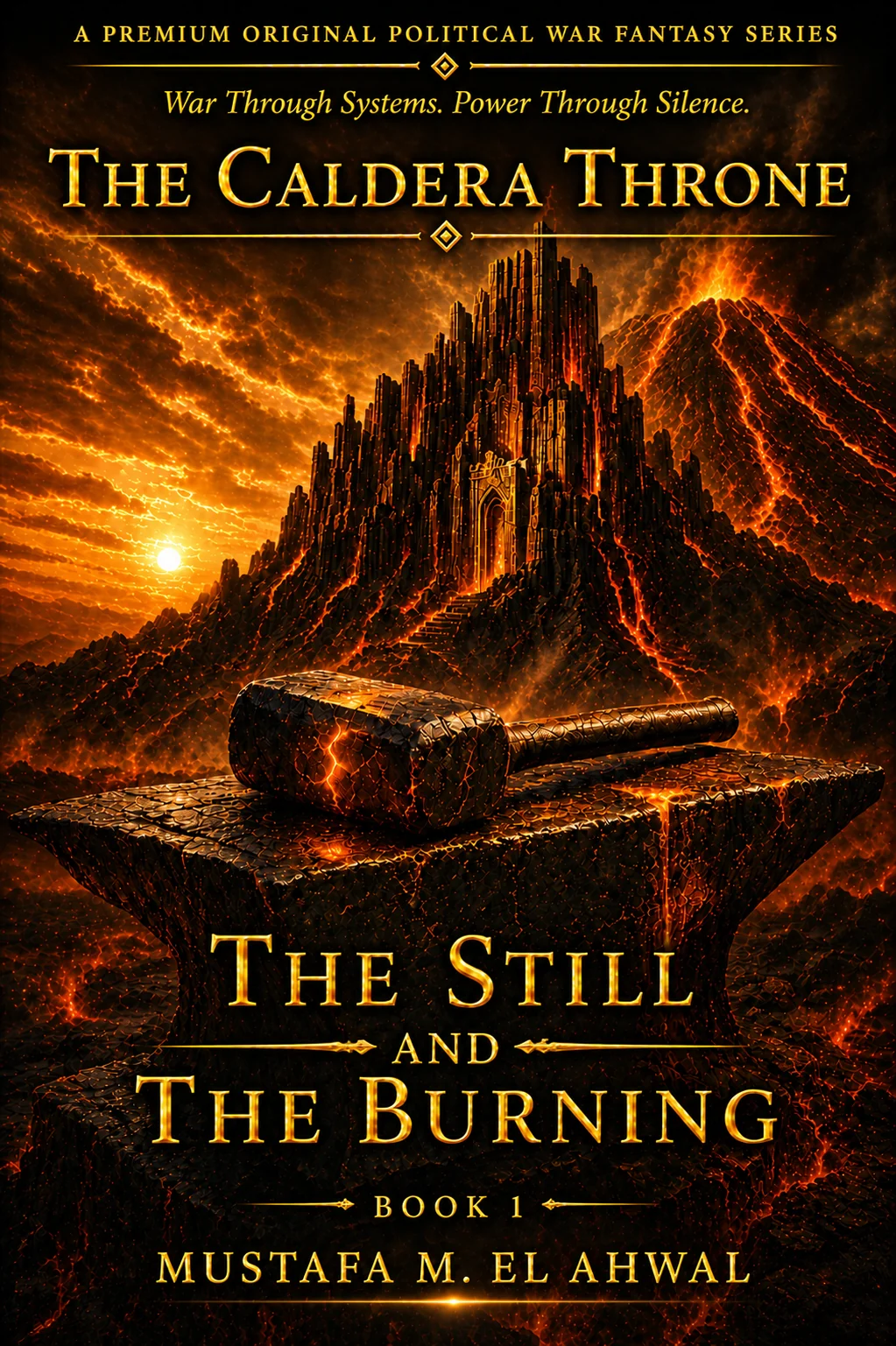
Cover for The Still and the Burning
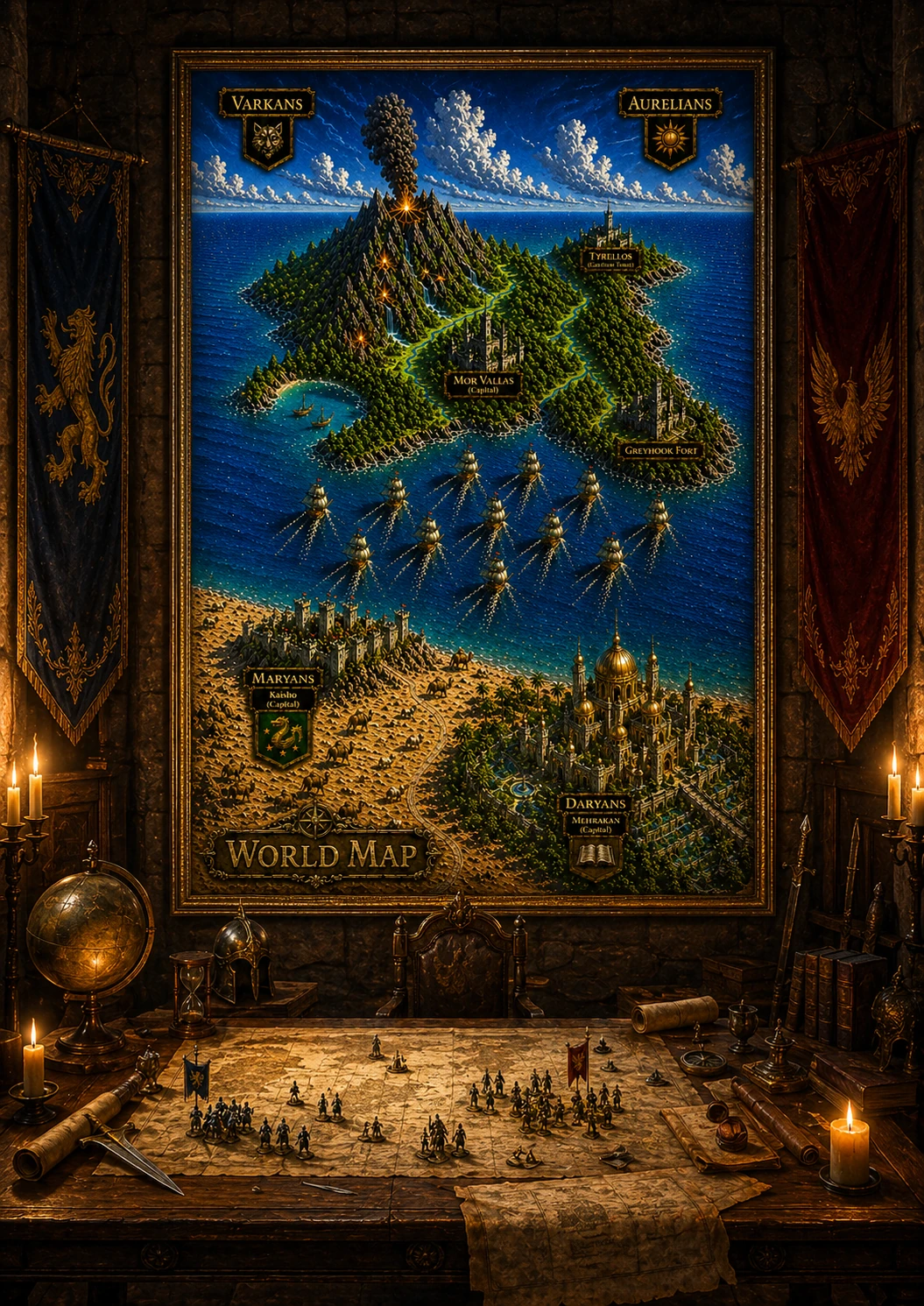
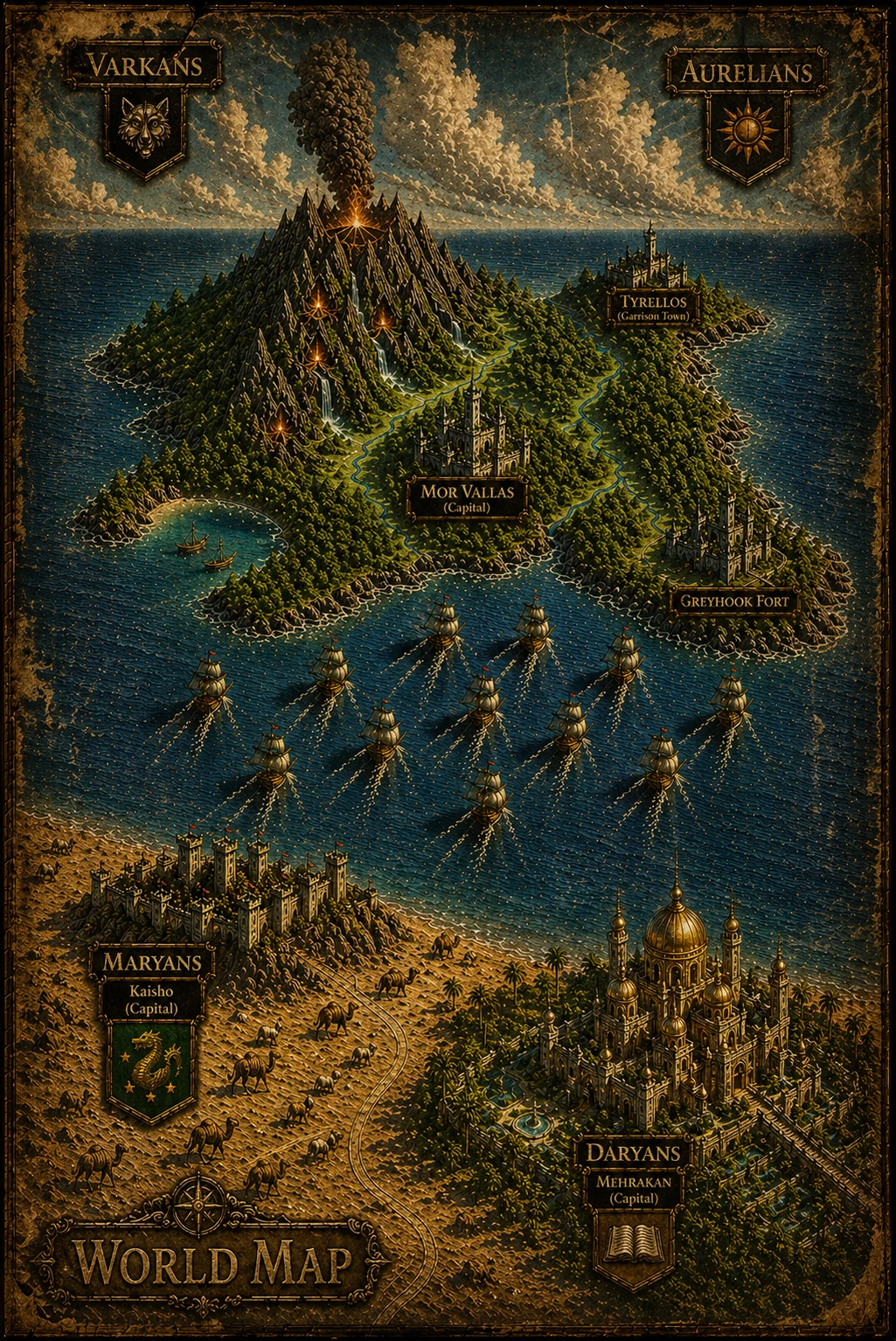
Operational map for The Still and the Burning
Operational map — Book I

Book Two of The Caldera Throne

THE EMPIRE OF LEDGERS

Across the sea, war begins before ships move.

Thirty years ago, the sea swallowed two hundred Maryan ships.

It did not swallow the debt.

In Kaishō, the harbor capital of Marya, empty berths have become part of the city’s architecture. Shipyards rise where grief once stood still. New hulls take shape under hammer, rope, and ritual discipline. King Shen has spent three decades rebuilding not only a fleet, but the right to return to the volcanic island that broke Marya’s command of the sea — and perhaps took from him the one name he has never been able to bury: Elyanna, his sister, lost beyond the water and trapped inside the silence Marya failed to cross.

Now the fleet is nearly ready.

But ships do not rise from grief alone. War needs timber, iron, cordage, preserved food, skilled labor, signatures, permission, and gold that moves through the mainland without apology. For that, Marya needs Darya.

Princess Mai rides south to Mehrakan, the inland capital of Darya, where power does not shout from balconies or march under banners. It is stamped, filed, witnessed, routed, delayed, authorized, and made enforceable. In Darya, what is recorded becomes truth.

What is delayed begins to disappear.

Mai’s mission is simple only in appearance: secure the funding that will accelerate Marya’s return to the sea without allowing Darya to turn assistance into ownership. She must ask without seeming weak, negotiate without surrendering command, and return with terms strong enough to survive the men waiting at home to call victory humiliation.

General Kaito is one of those men. Cold, disciplined, and dangerous in the way of men who prefer doctrine to recovery, he believes the fleet should return through strength, not dependency. If Mai succeeds, he will name the success submission. If she fails, he will call the failure inevitable. Beside him moves Akira, graceful, observant, and quietly poisonous — a woman who understands that reputations can be wounded long before facts arrive to defend them.

The road to Mehrakan becomes the first battlefield.

A dead guard. A misplaced folio. A rockfall in a canyon. Altered records. Whispered concern carried ahead by riders who believe they are only repeating what they heard. Mai learns quickly that the attack against her is not designed to stop her body. It is designed to make her arrive already interpreted.

In Mehrakan, Princess Azadeh sees the same war from the other side of the ledger. Precise, severe, and politically caged, she reads irregularities in seals, relay chains, and document classifications before anyone else understands that the trap has already been built. She knows what her court can offer Marya. She also knows what men like Arvand will try to hide inside the offer.

Arvand, Azadeh’s husband in law but not in loyalty, has spent years studying the machinery of power from rooms that never quite belonged to him. He is patient, resentful, elegant, and merciless. With Babak — his soft-handed operator of debts, clerks, corridors, and dirty errands — he turns procedure into a weapon. They do not need armies. They have routing slips, seal rooms, tired witnesses, paid runners, false accusations, and men willing to kill before a name can be spoken.

The treaty negotiations become a war of clauses.

Observer rights. Annex scope. Duration. Remedy. Management transfer. Every phrase has a hidden edge. Every concession may become a future chain. Across the table, Mai and Azadeh become unwilling allies, then something sharper and more valuable: two women who understand that sovereignty can be lost one reasonable sentence at a time.

Mai wins the agreement — but winning the document is not the same as winning its meaning.

Before she leaves Mehrakan, the treaty draws blood. Smoke breaks a departure yard. Horses panic. Silver is planted. A false accusation is staged. A witness begins to speak and an arrow cuts the sentence from his chest. The agreement is real enough now that men are willing to kill around it.

Mai returns to Kaishō with Daryan funding, bounded terms, and evidence written in blood. Yet Kaito is waiting with the most dangerous argument of all: not that she failed, but that what she had to fight proves Darya’s intent. In council, Mai must defend not only what she signed, but what the fleet’s restoration will mean to the people building it.

The shipyards move. Timber arrives. Credit flows. The southern frame wakes. The harbor begins answering grief with work.

But Arvand and Babak do not stop. Akira does not stop. The war shifts from treaty table to implementation: grain confirmations, cordage delays, inspection triggers, crew rosters, certification boards, and the narrow timing by which a fleet becomes more than a promise. Their aim is no longer only to prevent restoration. It is to weaken the sequence, thin the command spine, and make every success arrive carrying damage.

Mai forces the departure through anyway.

Her campaign is not reckless invasion. It is pressure. She must control the timing of the crossing, protect the fleet from sabotage, and prepare to suffocate the island before open war begins. If Marya cannot yet strike, Mai will make the island feel the return before the first soldier lands.

Four royal command ships sail with the restored body of the Maryan fleet. Jian, the only surviving navigator from the catastrophe thirty years before, returns to the waters that made him the last witness. Mai carries the crossing forward, knowing the mainland behind her is still being contested by people who understand absence as opportunity.

And while the fleet moves beyond messenger reach, the mainland bends.

In Mehrakan, Arvand constructs an emergency with the calm patience of a man who knows that law, if handled correctly, can look like order even while it replaces a kingdom from within. Bahram is constrained. Azadeh is confined. Arash is framed. Giv listens through walls. The machinery continues — but under another hand.

In Kaishō, Kaito expands his reach while the ships are at sea.

The fleet has finally crossed the distance that grief could not.

The volcanic island appears on the horizon: dark, active, indifferent.

The landing has not yet happened.

The island does not know they are coming.

Word Count: approximately 112,000 words

Rights & Enquiries
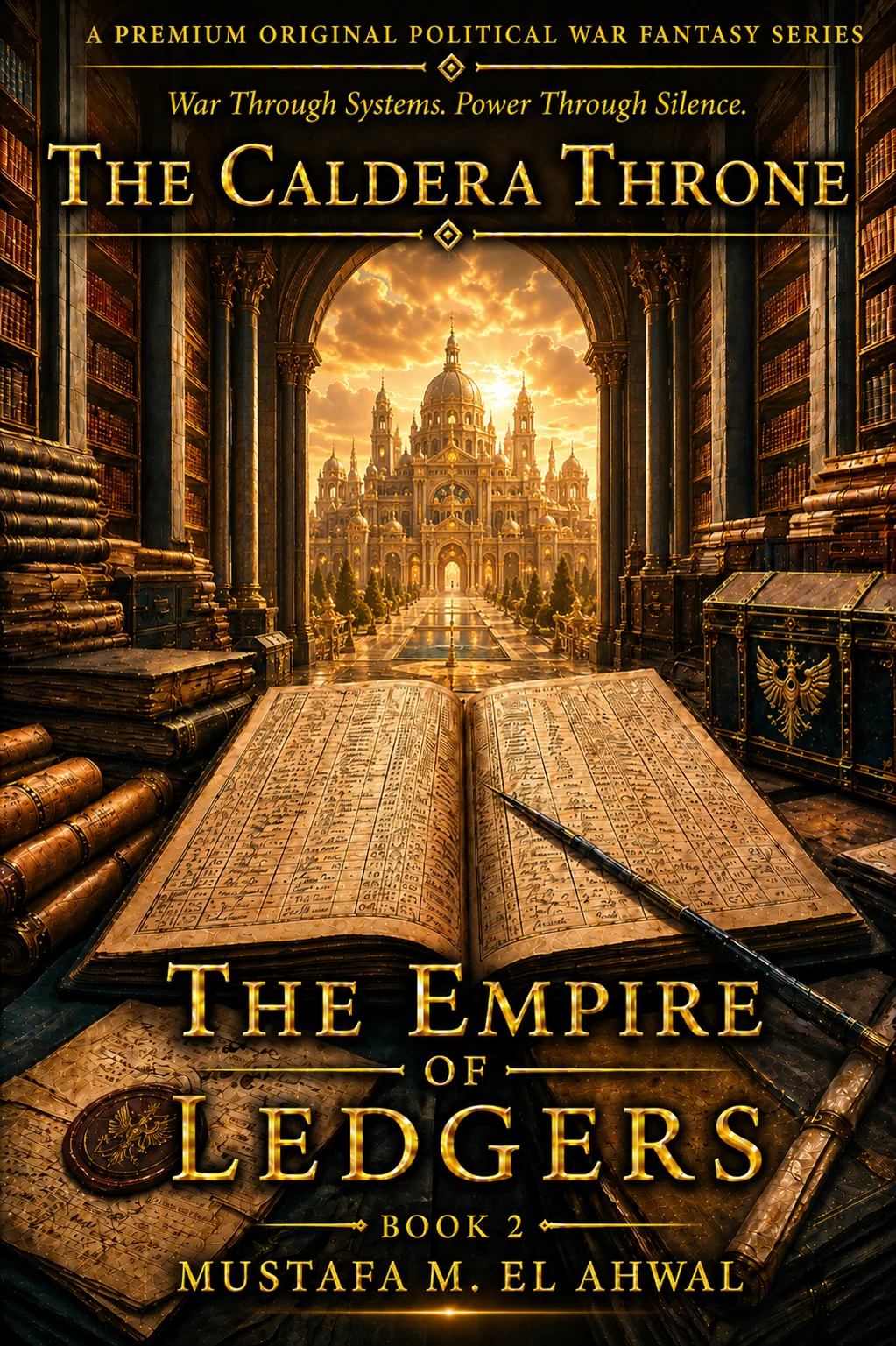
Cover for The Empire of Ledgers
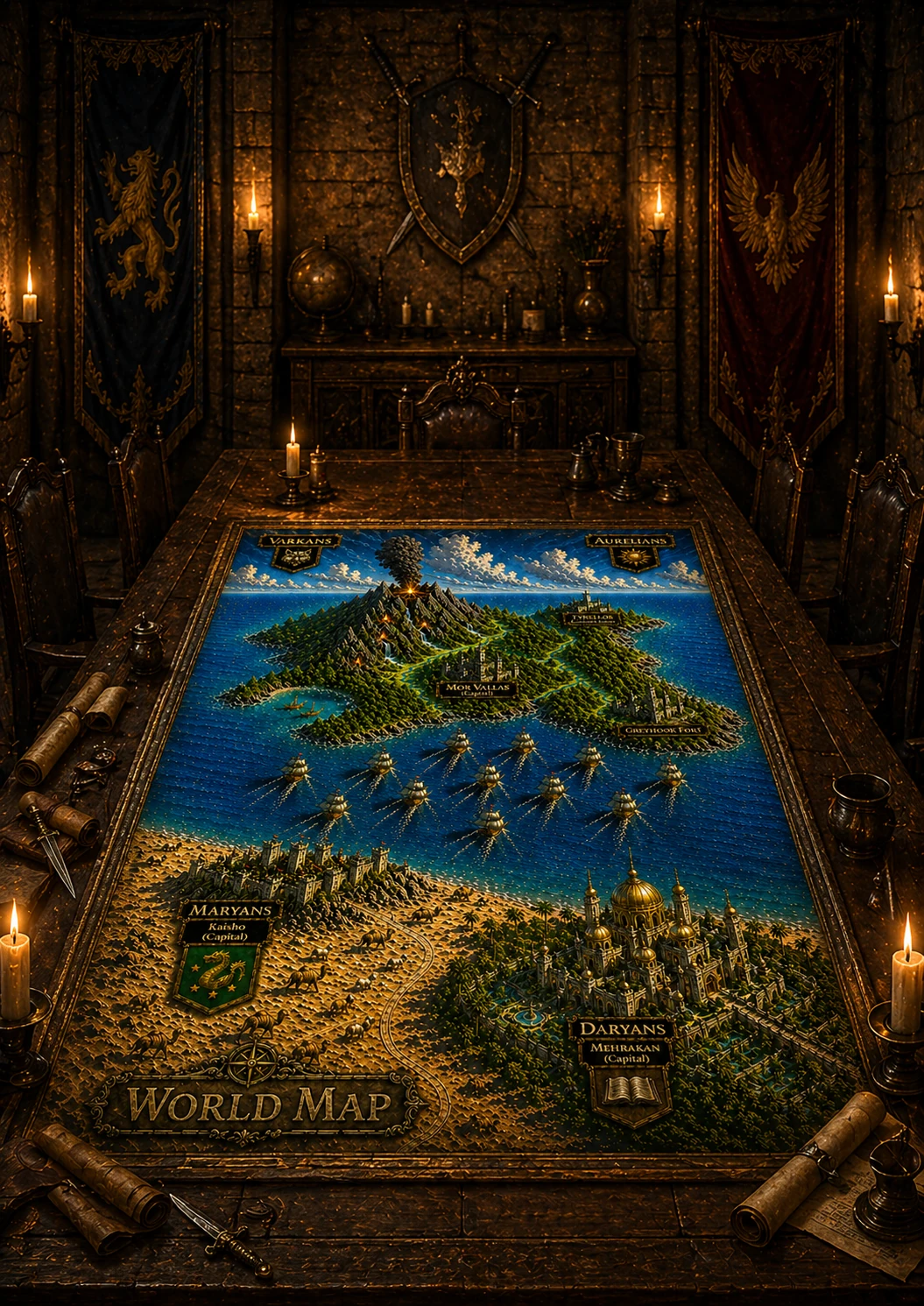
Strategic planning map for The Empire of Ledgers
Strategic planning map — Book II

Book Three of The Caldera Throne

WHAT THE MOUNTAIN KEPT

The sea no longer separates what has been delayed.

The Maryan fleet arrives at dawn.

For thirty years, the volcanic island believed the mainland was memory: drowned ships, dead soldiers, lost names, and a past safely buried beneath palace language. Now the southern horizon is full of sails. The old distance has failed. The wound beyond the water has returned with hulls, commanders, witnesses, and the weight of a kingdom that has spent a generation preparing to cross back.

Marya has returned.

But Mai does not land.

That is the first shock. The fleet holds offshore, visible and withheld, turning its silence into pressure. Every watchtower sees it. Every garrison commander counts it. Every faction on the island begins to move before the first Maryan soldier touches shore. Marcus’s regime cannot fight what has not yet landed, so it tightens around what it can still reach: roads, food, checkpoints, records, prisoners, rumors, and fear.

The fleet’s arrival does not end the island’s crisis.

It exposes it.

At Greyhook, Adrian holds a fortress that has become more than refuge. Once a royal-blooded blacksmith who wanted only distance from power, he now controls the island’s first fragile structure capable of acting outside Mor Vallas. With Rhia, Livia, Rorik, and the coastal contacts around him, Greyhook becomes a listening post, a resistance cell, and the beginning of an order Marcus cannot classify. From there, Adrian reads the island as he once read iron: pressure, fracture, load, failure, and the exact point where collapse can be turned into leverage.

He does not sit on a throne.

That is why people begin to trust him.

With him are the documents recovered from the Winter Cells — proof that Marcus fabricated the official account of King Aurelius’s death. The evidence exists. But evidence alone cannot rule. It needs witnesses. It needs protection. It needs a political structure strong enough to survive the truth it reveals.

Inside Mor Vallas, Helena preserves her own hidden archive: altered records, false seals, controlled succession, and the manufactured legitimacy on which Marcus’s rule depends. She understands what Marcus does not: a throne built on edited truth does not collapse only when enemies attack it. It collapses when the record can no longer carry the lie.

Marcus answers every threat with more control.

Checkpoints multiply. Food becomes permission. Movement becomes suspicion. Custody chains swallow anyone who moves through the wrong road at the wrong hour. The palace becomes a chamber of fear, rivalry, and self-preservation, where every faction calculates who will survive the fall and who can profit from it before it comes. Marcus believes he is defending the throne. In truth, he is proving the throne has become too weak to hold the kingdom it claims.

Then Elyanna is taken.

For thirty years, she has lived on the island as the one Maryan life the old disaster did not return. Shen’s lost sister. Mai’s aunt. A woman who has survived captivity, silence, palace danger, and the long exile of being alive inside a history that wrote her as gone. When Marcus’s machinery pulls her into its custody chain, the island does not yet understand what it has taken. Adrian does. So does Ashbourne. And once a system realizes the value of the person it has swallowed, rescue becomes more than personal. It becomes political war.

War spreads in layers.

Fort against palace. Fleet against silence. Hunger against obedience. Evidence against official history. Mainland claim against island isolation. Prophecy against the people who tried to own it.

To some, the Maryan fleet brings rescue. To others, invasion. To others still, proof that the old prophecy has begun moving beyond human control. Mai brings ships, but not ships alone. She brings Marya’s claim, Jian’s memory of the drowned fleet, Elyanna’s unresolved history, and the hard discipline of a commander who knows that landing too soon may unite the island against her. Her first campaign is restraint. Her weapon is pressure. Her battlefield is the island’s own fear.

While the fleet waits, the island turns on itself.

Varric advances toward the sealed chamber inside the mountain — the place tied to the cost-clause removed from the public prophecy. The old verse was never only a promise. It was an accounting. What the mountain kept was not forgotten. It was held. And now the conditions that kept it buried are beginning to fail.

The sea lies still.

The moon bleeds silver.

The mountain drinks red.

The Heart begins to rise.

Adrian becomes more dangerous because he becomes more necessary. He does not claim rule, but every crisis bends toward him: supply, morale, geography, evidence, loyalty, timing, and consequence. Marcus has command, but Adrian has structure. Marcus has fear, but Adrian has people who still choose. Marcus has the city, but not the island’s trust.

When the fleet finally lands, every alliance becomes provisional.

Authority is no longer inherited cleanly, recorded safely, or enforced by walls alone. Marya wants recognition. Greyhook wants proof strong enough to break the lie. Helena wants truth protected from the men who would bury it again. Varric wants the mountain’s answer. Marcus wants obedience from a kingdom already slipping out of his hands.

The war is no longer only for territory.

It is for the right to define what happened, who may rule after Marcus, and whether the island can survive the truth it was built to avoid.

Marcus’s regime does not fall because one army breaks it from outside. It falls because the systems holding it together begin to betray him from within. The crowd outside Mor Vallas no longer behaves like a crowd waiting for command. It has become a direction.

Then the mountain moves.

What was managed instead of resolved returns as consequence. The buried history does not arrive as mercy. It arrives as debt presented for payment. The prophecy is no longer a verse controlled by palace language, Varkan memory, or mainland interpretation. It has become a force acting on everyone who tried to use it, suppress it, or survive it.

By the end, Marcus’s rule collapses. The island’s isolation ends permanently. Adrian’s position becomes impossible to deny. Mai’s arrival has changed the island forever. Elyanna’s survival is no longer a private wound, but a political fact that connects the drowned fleet, the mainland, and the throne’s broken history.

But collapse is not settlement.

The island is not yet governed. The truth has surfaced, but authority has not found its final shape. The old world has broken. The new one has not yet learned how to stand.

The reckoning has begun.

It is not yet complete.

Word Count: 120,000 words

Rights & Enquiries
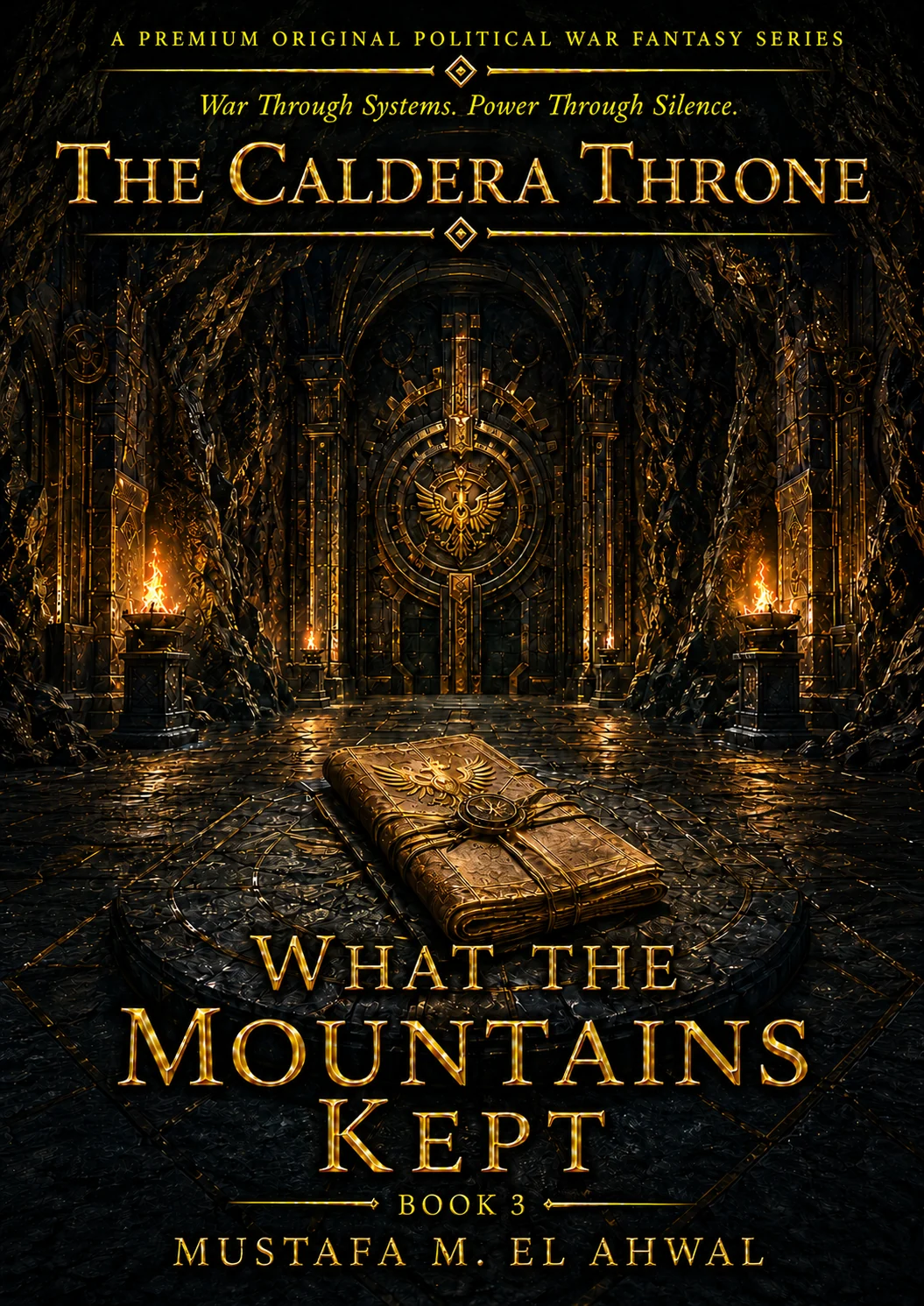
Cover for What the Mountain Kept
Active campaign map for What the Mountain Kept
Active campaign map — Book III